

Description
Multi-turn Electric Intelligent Actuator Overview
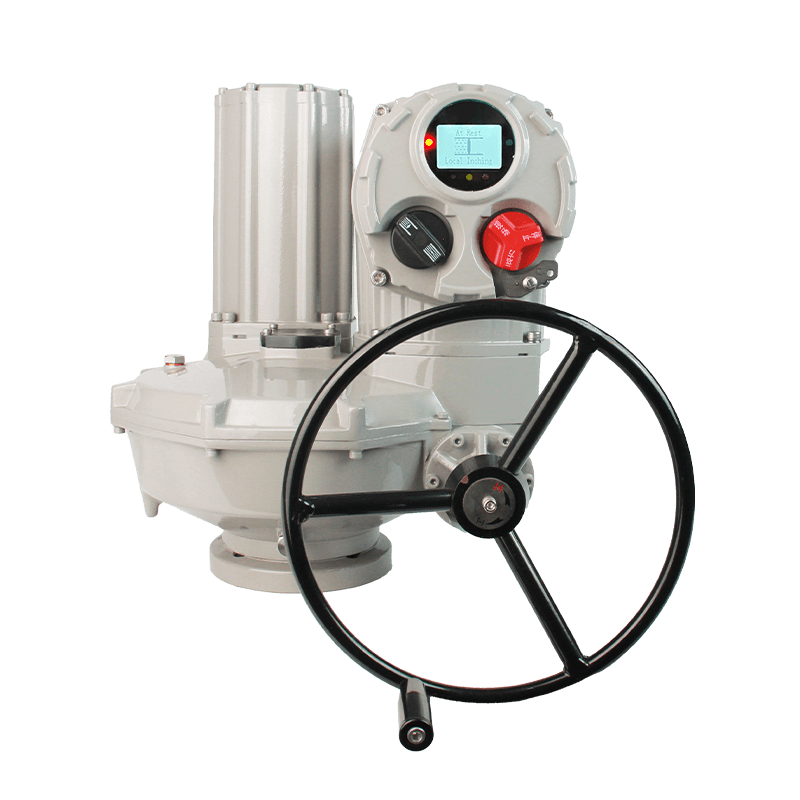
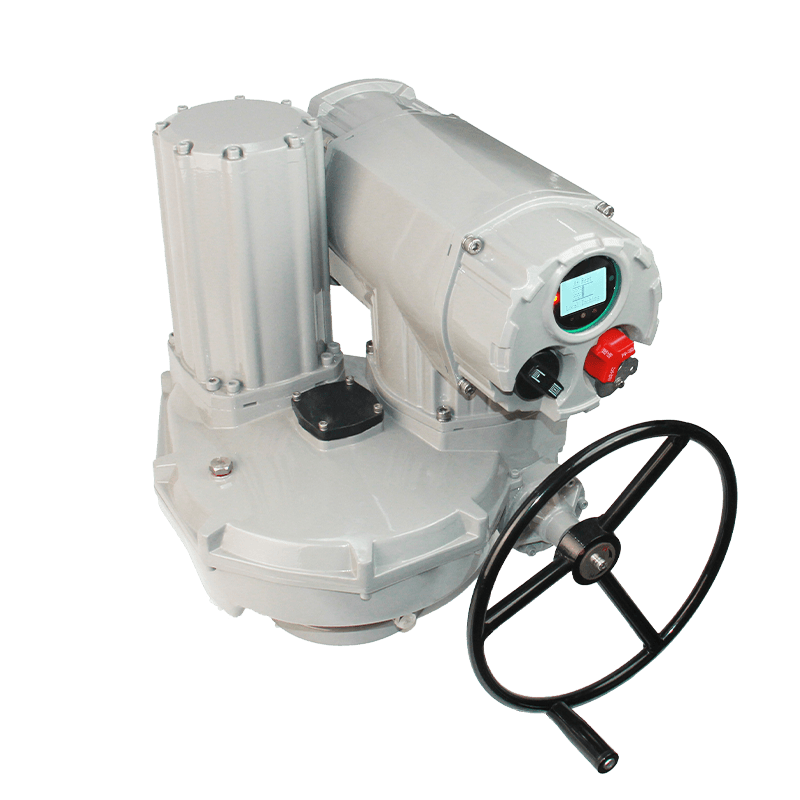
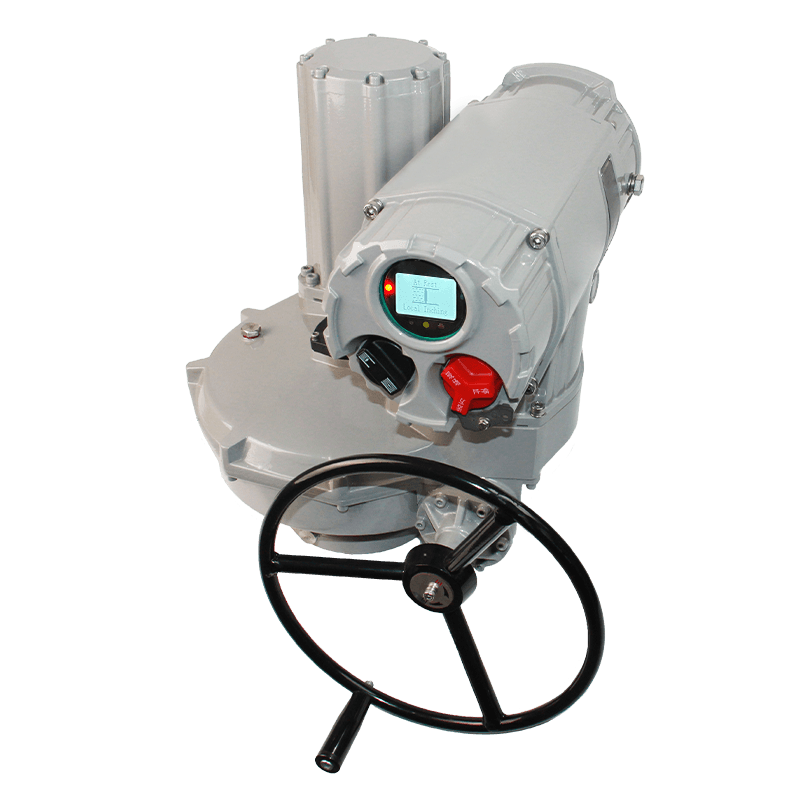
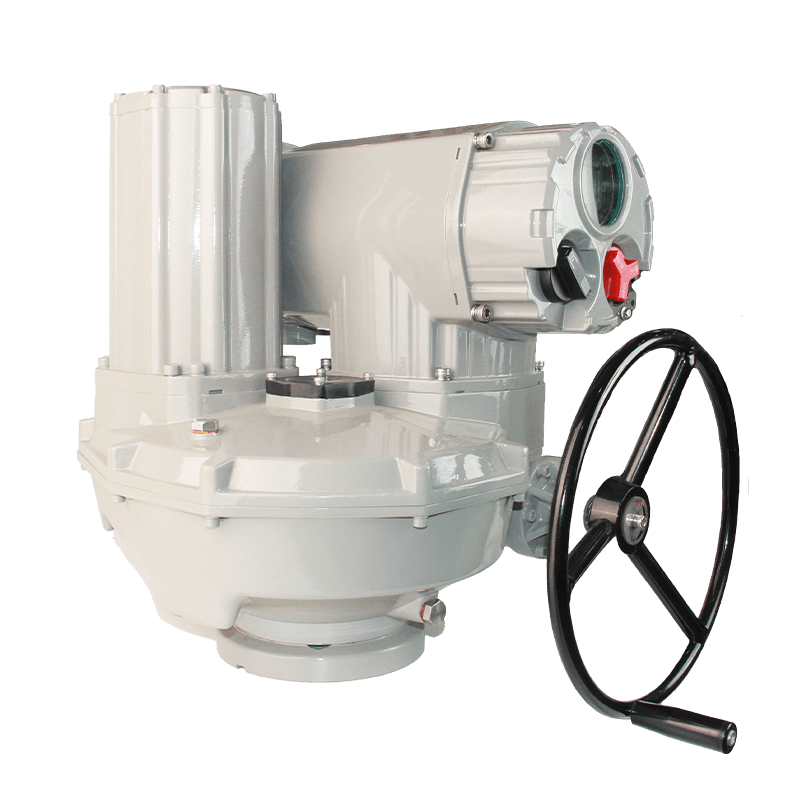
Modern process plants demand smart devices that communicate seamlessly with DCS, PLC, and SCADA systems. Our factory’s multi-turn electric intelligent actuator, the BD/BDM20-IIC series, integrates digital communication as a core capability. This multi-turn intelligent actuator supports Profibus-DP (V0 and V1), Modbus (RTU half-duplex and full-duplex), DeviceNet, FF (Foundation Fieldbus), and Hart protocols. You can order redundant bus cards for critical applications. The actuator provides real-time torque, position, temperature, and diagnostic data over the bus. You also get standard analog I/O: 4-20mA input for setpoint and 4-20mA output for position feedback.
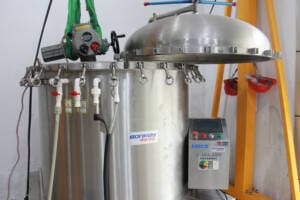
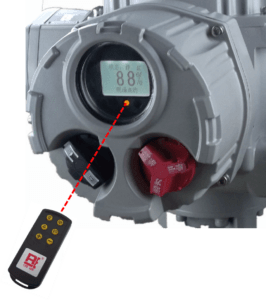
The non-intrusive design uses magnetic knobs and infrared for local configuration. The absolute encoding position sensor eliminates battery-backed memory – the actuator knows its position immediately after power-up. The absolute encoding torque sensor gives you continuous torque monitoring and settable alarms. You can choose between on-off (BD-IIC) or high-cycle modulating (BDM-IIC) models – the latter uses solid-state relays for 1200 starts/hour. The multi-turn intelligent actuator comes in IP68 enclosure (2m, 48h) and explosion-proof versions (Ex db IIC T4 Gb / Ex tb IIIC T130℃ Db). The planetary gear transmission provides 30% higher efficiency than worm gears and lifetime lubrication.
Does the Multi-turn Electric Intelligent Actuator support Hart communication?
Yes. Our factory provides a Hart card that superimposes the digital signal on the 4-20mA loop. You can then use a Hart communicator or a Hart-enabled I/O card to read/write device variables.
Features
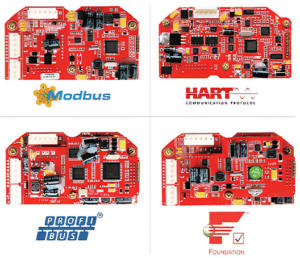
Digital integration starts with the fieldbus option. Our factory’s multi-turn intelligent actuator supports seven bus protocols. You order the actuator with the desired bus card pre-installed. The Profibus-DP card (PV0 or PV1) provides full device description (GSD) files and supports baud rates up to 12 Mbaud. The Modbus card (M for half-duplex, DM for full-duplex) works with standard RTU format. The DeviceNet card (DE) integrates with Rockwell Automation systems. The FF card (F) provides Foundation Fieldbus H1 communication for process automation. The Hart card (H) enables digital communication over the 4-20mA loop.
For redundancy, order PRV0 (Profibus redundant) or PRV1, or MR (Modbus redundant dual card). All bus cards feature electrical isolation. Besides bus, the actuator includes standard analog control: 4-20mA input (terminals 27-28) with adjustable range and reverse action. The analog output (terminals 13-14) provides 4-20mA proportional to valve position, load impedance ≤750Ω. The actuator also has four configurable bistable contacts (S1-S4) that you can map to any combination of limit, torque, or intermediate position. The MONI alarm contact activates for power loss, phase loss, motor overheat, signal loss, ESD active, or internal fault.
The remote indicating contact (terminals 15-16) shows when the selector is in remote position. The ESD input (terminal 12) overrides all other commands. You also get two-wire control for simplified wiring – choose “signal open/no-signal close” or reverse. The non-intrusive infrared setting tool allows full configuration without opening the cover. The LCD displays real-time bus communication status and diagnostic messages.
Model and Type
The multi-turn intelligent actuator family divides into three control types: on-off (BD-IIC), intermittent modulating (BD-IIC with analog control), and frequent modulating (BDM-IIC with solid-state relays and bus capability). For digital networks, you select the appropriate bus card suffix: PV0, PV1, PRV0, PRV1, M, DM, MR, H, DE, or F. For linear motion, the BDM-IIC-L series provides thrust up to 138 KN. The split-body version (F suffix) separates the controller for harsh environments. The enclosure protection includes standard IP68 (no code) or explosion-proof (Ex code). The flange type is ISO 5210 F10, F14, F16, F25, F30. When ordering, you also specify the control voltage for remote signals: low voltage (20-60Vac/dc) or high voltage (60-240Vac/dc). Our factory can customize the bus parameters (node ID, baud rate, parity) before shipping.
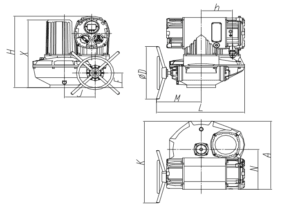
Specifications
- Power supply: three-phase: 380Vac±10% 50Hz±2%; single phase: 220Vac±10% 50Hz±2%
- Input signal: DC4-20mA; dry contact; DC24V and AC220V pulse and electric frequency signals
- Output signal: DC4-20mA; 4 groups of bistable output contacts configurable in the field, 1 group of monostable output contacts for remote instruction, and 1 group of monostable output contacts of fault alarm.
- Output contact capacity: 250Vac/5A or 30Vdc/5A
- Output current load impedance: ≤750Ω
- Ambient temperature: -30°C- +70°C
- Protection class: IP68
- Flange standard: ISO 5210:2017 (GB/T12222-2023)
- Explosion-proof marking: Ex db IIC T4 Gb; Ex tb IIIC T130℃ Db
- Approvals (optional): ATEX, IECEx, CSA (available on request with longer lead time).
| BD20-IIC | Single phase | Three Phase | ||||||
| Output Speed (rpm) | Rated Torque (N.m) | Motor Power (KW) | Capacitor (μF) | Rated Current (A) | Rated Torque (N.m) | Motor Power (KW) | Rated Current (A) | Locked Rotor Current(A) |
| 12 | 100 | 0.72 | 40 | 4.6 | 200 | 0.37 | 1.4 | 6.9 |
| 24 | 100 | 0.72 | 40 | 4.6 | 200 | 0.37 | 1.4 | 6.9 |
| 36 | 70 | 0.72 | 40 | 4.6 | 130 | 0.37 | 1.4 | 6.9 |
| 48 | 60 | 0.72 | 40 | 4.6 | 100 | 0.37 | 1.4 | 6.9 |
| 72 | 30 | 0.72 | 40 | 4.6 | 50 | 0.37 | 1.4 | 6.9 |
| BDM20-IIC | Single phase | Three Phase | ||||||||
| Output Speed (rpm) | Modulating Torque (N.m) | Rated Torque (N.m) | Motor Power (KW) | Capacitor (μF) | Rated Current (A) | Modulating Torque (N.m) | Rated Torque (N.m) | Motor Power (KW) | Rated Current (A) | Locked Rotor Current (A) |
| 12 | 50 | 90 | 0.72 | 40 | 4.6 | 140 | 180 | 0.37 | 1.4 | 6.9 |
| 24 | 50 | 90 | 0.72 | 40 | 4.6 | 140 | 180 | 0.37 | 1.4 | 6.9 |
| 36 | 35 | 60 | 0.72 | 40 | 4.6 | 100 | 120 | 0.37 | 1.4 | 6.9 |
| 48 | 30 | 50 | 0.72 | 40 | 4.6 | 70 | 90 | 0.37 | 1.4 | 6.9 |
| 72 | / | 35 | 45 | 0.37 | 1.4 | 6.9 | ||||